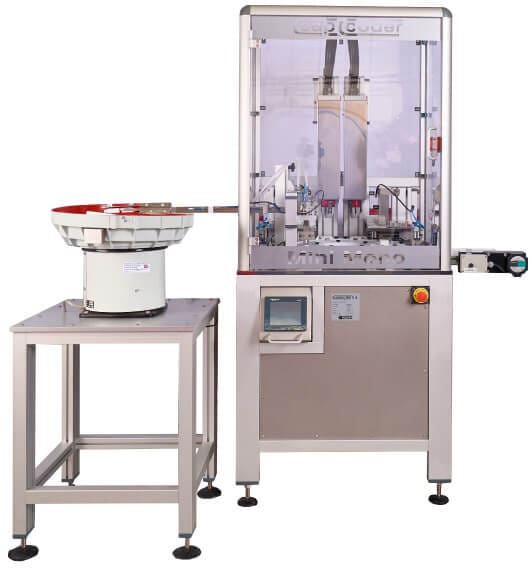
Cap Coder, Cap Coder, an Oxfordshire manufacturer of production line machinery for pharmaceutical, life science, chemical and healthcare customers, replaced on-premise Sage software, Excel and paper with Flowlens MRP and MES software. It now manages 24,000 bills of materials (BOMs) in one cloud system, knows what each machine costs in materials and labour step by step, and quotes delivery dates it can meet.
“At the point of quote, I can now say your machine is going to be delivered in 13 weeks, and I can actually achieve that target, rather than plucking numbers out of thin air.”
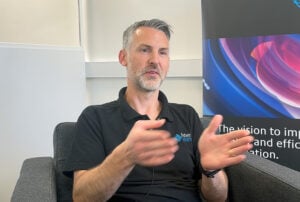
Paul Atherton, General Manager, Cap Coder
Industry: Machinery manufacturing: production line equipment for pharmaceutical, life and bio sciences, chemicals and healthcare
Location: Oxfordshire, UK
Key Challenge: Transition from paper-based systems to modern digital operations including integration with Xero
Scale: 24,000 BOMs
What problems did Cap Coder face before Flowlens?
Before Flowlens, Cap Coder ran Sage Manufacturing and Sage accounts as two separate systems on an in-house server, with Excel, Word documents and paper covering everything in between. Paul Atherton, who joined as General Manager in 2023 to modernise the business, describes it as a “typical early 2000s, late nineties set up” with an on-premise server that was no longer fit for purpose.
That set-up caused six specific problems:
- Disconnected systems. Sales were created on the accounting side and passed across to manufacturing, which Steve Drake, Design Engineer, says left manufacturing as “an add-on” that was always catching up.
- Overnight MRP. Running material requirements planning took about an hour of system time and slowed other departments, so it ran at night and data was stale all day.
- Office-bound access. Staff had to be in the office to use the software.
- Excel for BOMs and job cards. A lot of BOM management, job card management and production flow lived in spreadsheets.
- No view of the build. Paul says Cap Coder lacked a clear way of “seeing where the machines were and what state they were in”.
- Slow spare-part tracing. Finding the parts on a machine already sold meant digging through paper records.
“When a customer phones up, I want to be able to go, right, what machine serial number have you got? And then go straight to the BOM it was built on and find the spare part they want, not spend three weeks looking through paper, Excel sheets, works orders, and an invoice that doesn’t really detail what the machine was.”
Paul Atherton, General Manager, Cap Coder
Steve describes the difference now as immediate: “Everything I type in, as soon as I’ve typed it in, it’s live. Anyone can see it.”
Why did Cap Coder choose Flowlens?
Cap Coder chose Flowlens because it was built for machinery and equipment manufacturing first, ran in the cloud, connected to modern accounting software, and came with a team that wanted Cap Coder to succeed. Paul Atherton compared several alternatives and says many offered manufacturing only as an add-on to another type of system.
“It wasn’t a single system that was inventory management, for argument’s sake, with BOM management on top. It was full MRP, and it would tie into modern accounts packages like Xero or QuickBooks. That was crucial, because now with modern APIs you can expand that into a software suite.”
Paul Atherton, General Manager, Cap Coder
Three further factors decided it:
- One journey from sale to service. Paul wanted staff to take a sale through BOMs, production and the shop floor in one suite, with times and BOM costs tracked, “a true reflection of individual margins on products”, and the data kept for servicing and spares afterwards.
- Easy to learn. Paul says Flowlens’ interface was what you would expect of modern software, which “brought training time down by a significant amount”. Ross Prior, Managing Director, who describes himself as not methodical and not a fan of systems, calls it “so intuitive. You almost can’t get it wrong.”
- The relationship. Paul says that from the moment he quoted, “you could really tell that the guys were passionate, cared, and wanted to help you succeed, even if it meant them telling you you were doing things wrong” and how to implement processes better. He also wanted a British supplier with experience in machine building, one he could phone.
How does Cap Coder manage multi-level BOMs and assemblies in Flowlens?
Cap Coder builds each machine as a top-level BOM with its assemblies and parts beneath it, in the order the machine is built, and reuses templates for repeat platforms. Across the business that adds up to 24,000 BOMs in one system.
From a flat parts list to built components
Before Flowlens, a BOM was a list of parts. Paul Atherton says BOMs “weren’t designed to encourage you to create them as they were built”, so components got missed and the true cost of a machine was unclear. Now each BOM is split into the assemblies that make up the machine:
“Now we are separating that list into its built components and going, ‘Here is a clutch assembly. These are the bits you need to start building it. This is the first step, and here are some more parts for the second step.’ Then we build it all up, so we can have detailed workflows, combined with SOPs.”
Paul Atherton, General Manager, Cap Coder
Ross Prior, Managing Director, who designs BOMs and creates part numbers day to day, builds the structure top-down across browser tabs: “My left one is always the top level with the BOM. I create the part and the part numbers, and external parts if need be, and then I refer back to the first one, the BOM, as I’m building the assembly.” Finding a part is quick too. He can type a Cap Coder number, a BOM number or a manufacturer’s part number, even “three of the characters out of 20”, and Flowlens finds it.
Templates for repeat machine platforms
Many Cap Coder machines share the same frame and ecosystem and are tailored to each customer. Previously that meant building a SolidWorks model and uploading parts manually. Now Cap Coder standardises its platforms in templates.
“It’s no longer creating all of the BOM. It is looking for your template. You copy that across, you’ve got 90% of your work instructions, and it’s just a massive time saver.”
Paul Atherton, General Manager, Cap Coder
Paul adds that detailed BOMs now carry drawings and full SOPs, and that the time saved “directly impacts margin”.
How Flowlens handles nested assemblies
In Flowlens a sub-assembly has its own part number and workflow and rolls up into the parent job card automatically. Large multi-level BOMs of 1,500 lines or more are workable, and we advise starting simple and adding complexity gradually. See BOM software, engineer-to-order software and assemble and build-to-order software for more.
How does Cap Coder track the true cost of each machine?
Cap Coder now records the cost of every machine from materials to labour, step by step. Each BOM is built to include all its components, and shop floor staff clock on and off jobs in the Flowlens shop floor app so labour time is costed against the step.
Before Flowlens, Cap Coder could see materials but not labour, and materials were often incomplete. Paul Atherton explains that the BOMs “were just a list of parts, so a lot of parts got missed”, and there were no labour costs at all.
“Now we know exactly what the machine costs, right down to the penny, in every fitting and every minute spent on a job and on a step.”
Paul Atherton, General Manager, Cap Coder
That changes how the business prices and manages work. Paul says Cap Coder can now “do a cost analysis of everything we produce” and see where it makes a profit and where it does not. He calls recording full costs from materials to labour “an absolute game changer”.
Building the process digitally exposes hidden gaps
Writing each machine’s build as numbered steps also showed Cap Coder work that had never been recorded.
“Because we’re building the process digitally and saying, here’s step one, step two, step three, we’re actually uncovering gaps. Someone says, ‘Oh, I turned down a screw.’ Well, we could have ordered the correct length in the first place.”
Paul Atherton, General Manager, Cap Coder
Paul describes this as the biggest benefit Cap Coder did not see coming: an honest view of where its processes were failing.
How have purchasing, the shop floor and quality control changed?
Purchasing now works from a live shortage report across all open orders, the shop floor builds from tablets showing work instructions and drawings, and quality records such as non-conformance reports (NCRs) and goods-in inspections are digital.
Purchasing and shortages
Steve Drake designs parts and machines, creates the BOMs, and also does most of the ordering. Once a part is added to a BOM it appears on the shortage list. He then creates the works orders, issues them to the workshop with drawings and tracks them through, and raises purchase orders directly from the shortage list. Because the MRP software updates in real time rather than overnight, he can wait for more orders to arrive before buying.
“Flowlens provides me with a shortage report, so I know what to order. I can hang back and wait until other orders have come in, and then it’ll provide me with a list of everything across multiple orders, rather than just me working on one order and then tomorrow having to work orders some more.”
Steve Drake, Design Engineer, Cap Coder
Works orders also give the workshop and the office a shared reference. Steve says he immediately knows what to look at when someone asks a question, because it has a works order number, “which we didn’t really have before”.
Shop floor visibility
Paul Atherton says Cap Coder staff can now build “without reams of papers and drawings”. On a single tablet they view work instructions, assign stock and see drawings. In the office, “within a couple of clicks” he can see what stage every machine is at, who is working on which job card and at which station. That visibility lets Cap Coder keep customers informed of delays and quote realistic delivery times.
Digital quality records
Cap Coder’s quality standards used to live on paper and in Excel sheets. Shop floor staff can now raise NCRs from the shop floor app, and the report goes through to the office to be managed. Paul says Cap Coder also records inspections on relevant goods inwards in the system.
How does Flowlens support Cap Coder’s office team and invoicing?
Flowlens gives Cap Coder’s office team live stock, pricing and order status in one place, and connects to Xero so invoices go out in a few clicks with the correct due date.
Kayleigh Callaway, who handles administration, quotes, orders and invoicing, uses stock visibility to give customers accurate timelines. When a customer’s purchase order is entered, Flowlens shows which items need buying and which are already in the stock room, and she prints a pick list that shows quantities and locations.
“It’s really handy having stock at your fingertips. I can see pricing and what we have in stock really quickly, which enables me to give an accurate timeline of when we can send stuff out and when it’s going to come in.”
Kayleigh Callaway, Administration, Cap Coder
Invoicing used to involve duplicate data entry and extra staff, which slowed invoices and pushed back due dates and cash flow. Paul Atherton says that now “within a few clicks” an invoice is through the system and with the customer with the correct due date, and that the Xero integration also feeds the dashboards he uses to see where the business is financially.
What did Cap Coder learn about implementing Flowlens?
Cap Coder’s advice is to clean your data before you migrate and to expect it to take longer than you think. Paul Atherton says many businesses underestimate how many mistakes already sit in their legacy data, from wrong descriptions to BOMs that are not quite right, and that realigning Cap Coder’s BOMs took weeks.
“Do have a look at your core data first before you do anything, because there will be issues with it. And allocate enough time to fix it. It takes a surprisingly large amount of time.”
Paul Atherton, General Manager, Cap Coder
On the supplier side, Paul describes the relationship as a two-way street: “Sometimes they’ll tell us we might need to move a process across. But equally, sometimes they’ll go, no, actually we can build a tool to fulfil that process.” Ross Prior suggests prospective customers talk to a similar-sized business first: “Have a chat with someone similar and see what their views are.” Flowlens offers implementation and change management services to support that transition..
Cap Coder and Flowlens: frequently asked questions
Can Flowlens manage large, multi-level BOMs?
Yes. Cap Coder manages 24,000 BOMs in Flowlens, structured as top-level BOMs with assemblies beneath them. A sub-assembly has its own part number and workflow and rolls up into the parent job card automatically. Multi-level BOMs of 1,500 lines or more are workable, and we advise starting simple and building complexity gradually.
How does Flowlens help find spare parts for a machine already sold?
Staff can start from the machine’s serial number and go straight to the BOM as it was built to find the part. Paul Atherton says this replaced weeks of searching through paper, Excel sheets and works orders.
How does Flowlens calculate the cost of a machine?
Material costs come from the manufactured BOM, and labour time is recorded by shop floor staff who clock on and off jobs in the shop floor app (or added by office staff if you’re not ready for the shopfloor app yet). Additional costs can also be captured for non-BOM items. Cap Coder sees the combined cost by step and by machine.
Can Flowlens replace Sage Manufacturing?
Cap Coder replaced Sage Manufacturing and Sage accounts with Flowlens for manufacturing and Xero for accounts. Flowlens integrates with Xero, QuickBooks and Sage 50.
Does Flowlens work for machinery builders who customise each order?
Yes. Many Cap Coder machines share a frame and platform and are tailored to each customer using templates. For engineer-to-order work, parts can be added or substituted on a live job card before a build is signed off. See engineer-to-order software.
How long does it take to move BOM data into Flowlens?
It depends on the quality of your data. Cap Coder had thousands of legacy products and spent weeks realigning its BOMs and advises checking your core data first and allowing generous time to fix it. The workload will depend on the number of BOMs, and how many actually need to be transferred to flowlens.
What results has Cap Coder achieved with Flowlens?
Cap Coder now runs quoting, BOMs, purchasing, production, quality records and invoicing in one cloud system, with accurate machine costs and delivery dates it can stand behind.
|
Area |
Before Flowlens |
With Flowlens |
|---|---|---|
|
Systems |
On-premise Sage Manufacturing and Sage accounts, Excel, paper |
One cloud system from quote to invoice, integrated with Xero |
|
MRP |
Run overnight, about an hour of system time |
Real time, live as soon as it is entered |
|
BOMs |
Flat parts lists in spreadsheets, parts missed |
24,000 BOMs structured by assembly, with reusable templates |
|
Machine cost |
Materials only, no labour |
Materials and labour recorded by step |
|
Delivery dates |
Estimated |
Quoted at the start and achievable, for example 13 weeks |
|
Spare parts |
Weeks searching paper records |
Serial number straight to the BOM and the part |
|
Purchasing |
Order by order |
Shortage report across all open orders |
|
Quality records |
Paper and Excel |
NCRs and goods-in inspections recorded digitally |
|
Invoicing |
Duplicate entry, delayed due dates |
A few clicks, correct due date, via Xero |
|
Working pattern |
Office-bound |
Factory open four days, business open five, one day a week working from home enabled by cloud access. |
|
Staffing |
Heavy office administration |
Savings allowed Cap Coder to employ more engineers on the shop floor |
See how Flowlens could work for your machinery business
Book a discovery call to talk through your BOMs, assemblies and costing with the Flowlens team.