
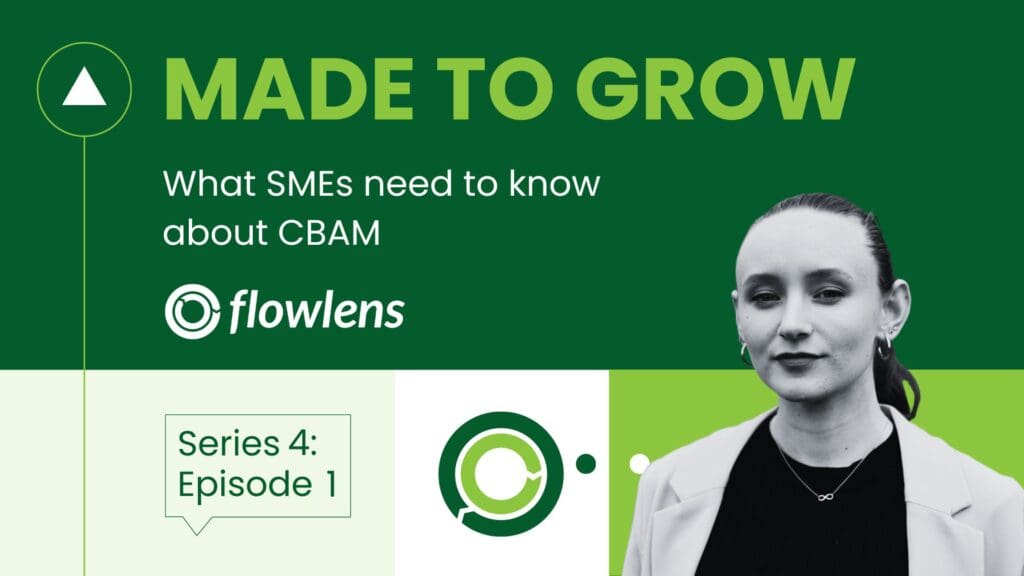
The first episode of Made to Grow for 2026 tackles a topic that’s quickly moving from “something to keep an eye on” to a real, practical concern for UK manufacturers: CBAM – the Carbon Border Adjustment Mechanism.
In this episode, Rich Dale is joined by Rebecca Meadows to break down what CBAM actually means for UK and EU supply chains, why manufacturers need to start preparing now, and how better data, systems and reporting can turn regulatory pressure into a genuine commercial advantage.
If you work in SME manufacturing, import materials such as steel or aluminium, or rely on complex supply chains, this episode offers clear, practical manufacturing insights without the usual regulatory fog.
A full transcript of this episode is available here: What is CBAM?
Watch this episode now:
About the Guest
Rebecca Meadows is the Founder and MD of Nexus Earth Group, a sustainability consultancy dedicated to supporting SME manufacturers.
Her company provides essential guidance on:
- Regulations and Reporting: Helping businesses navigate complex frameworks like the Carbon Border Adjustment Mechanism (CBAM) by focusing on accurate Scope 1, 2, and 3 emissions data.
- Operational Efficiency: Optimizing energy procurement and production processes to drive down costs and identify hidden savings.
- Funding Access: Connecting manufacturers with grants and support programs, such as those related to the UK Shared Prosperity Fund, to leverage existing resources without reinventing the wheel.
Rebecca’s core message is that regulatory compliance, particularly around carbon, should be viewed not as a burden, but as a competitive advantage that future-proofs contracts and delivers a positive impact on the bottom line.
What Is CBAM and Why Does It Matter to Manufacturers?
CBAM, or the Carbon Border Adjustment Mechanism, is designed to prevent carbon leakage by ensuring imported goods reflect the carbon cost of their production.
While CBAM is already live in the EU, the UK version comes into force in January 2027, making 2026 a crucial preparation year for manufacturers.
In practical terms:
- Importers will be responsible for declaring the embodied carbon of certain goods
- Exporters will be expected to provide reliable carbon data to customers
- Poor data, or reliance on estimates, can lead to higher costs and lost contracts
Rebecca explains that CBAM is ultimately about creating a level playing field, particularly for SME manufacturers competing in international markets.
Which Manufacturing Sectors Are in Scope?
The discussion focuses on the sectors currently covered by CBAM, including:
- Steel and iron
- Aluminium
- Cement
- Fertilisers
- Hydrogen
- Electricity (included in the EU scheme, but excluded from the UK version)
Even if your products aren’t directly in scope today, the message is clear: CBAM is expected to broaden over time, and supply chain pressure will reach far beyond primary importers.
For many manufacturers, the first sign of CBAM will be requests for carbon data from customers or suppliers, rather than direct reporting obligations.
Data, Systems and the Role of Manufacturing Software
A key theme throughout the episode is the importance of accurate data and connected systems.
Rebecca and Rich discuss:
- Why default carbon estimates are designed to be expensive
- How proper measurement protects margins and contracts
- The role of automation in reducing the admin burden of quarterly reporting
- Why relying solely on spreadsheets can become a risk as requirements increase
This is where manufacturing software, MRP systems and digital production data play a critical role. Bills of materials, supplier data and energy usage all feed directly into carbon reporting and CBAM compliance.
The episode also highlights how relatively low-cost data capture, such as sensors and smart monitoring, can uncover inefficiencies that would otherwise go unnoticed.
CBAM Reporting in the UK: What to Expect
Under the UK framework, CBAM reporting will be managed by HMRC and structured in a similar way to a tax return, with quarterly submissions.
Manufacturers will need:
- Reliable supplier data for imported goods
- A working understanding of Scope 1, 2 and 3 emissions
- Visibility across supply chains
- Confidence that reported figures are accurate and defensible
While estimates may be permitted, Rebecca explains why these typically result in higher charges and greater long-term risk.
Key Takeaways for SME Manufacturers
- Check whether your business is in scope, and where CBAM affects your supply chain
- Stop estimating and start measuring – accurate data protects margins
- Expect customers to request carbon data, even if you are not the importer
- Systems and automation reduce cost and risk, not add to them
- Carbon data is becoming a competitive differentiator, not just a compliance requirement
- CBAM is not just a regulatory issue. It will increasingly influence pricing, supplier selection and long-term customer relationships.
Tools, Support and Further Resources
Rebecca references a range of tools and support available to manufacturers, including:
CBAM cost and impact calculators
Government guidance on Scope 1, 2 and 3 emissions
Local chamber and enterprise agency support
Grant funding and digital manufacturing programmes
Relevant tools and resources from Nexus Earth Group can be found here:
Nexus Earth Group
Listen, Watch and Subscribe
Made to Grow is a manufacturing podcast sharing practical insights for SME manufacturers, operations leaders and supply chain professionals.
If you found this episode useful:
Subscribe to Made to Grow
Leave a review on your preferred podcast platform
Share the episode with others in manufacturing or operations
New episodes throughout 2026 will continue to explore manufacturing insights, MRP systems, manufacturing software and digital transformation, with a clear focus on what actually works for growing manufacturers.

FEARLESS Digital Transformation for SME Manufacturers
Cut admin. Boost efficiency. Take control.
Struggling with outdated processes? Our expert-led eBook helps SME manufacturers take the fear out of digital transformation. Download your free copy today!