So welcome back, Angela. So in a slight departure from our normal programming, we, are continuing our conversation from last month. For listeners who are just tuning in and didn’t hear last month’s, episode, I recommend you check it out first, because we’re talking about the building the right foundations for change, and today we’re gonna talk about execution.
[32:06] Rich Dale: And just for those who don’t know Angela, Angela is a experienced mechanical engineer, manufacturing expert, quality expert, coach, and, mentor and author, which we didn’t mention in the in the previous episode. Anja took me through the more intricate, aspects of publishing a book than I knew were, existed, when we were chatting the other day, and, it’s well worth worth it worth the effort. So I’d recommend, listeners checking out the, Business Journey for Tigers book on Amazon. So thanks, Angela, again, for for joining us and joining me.
[32:52] Rich Dale: So kicking off on that piece, you’ve done the foundations, you’ve got your team on board, you’ve picked the software you’re gonna to to go with, or you’ve picked the chip the change project that you’re gonna execute on. You know, what comes next?
[33:08] Angela Fumpson: So we we covered sort of the communications plan, in the last episode and actually getting your team on board. And we’re we’re now looking at how do you mentor and train through this implementation, and how do you manage that project. And I think, you know, I I’m a bit biased with mentoring, but I think mentoring and training is absolutely key. But also having the materials to allow easy access because, you know, people are not gonna remember everything when you onboard them.
[33:44] Angela Fumpson: And have you got easy instructions, easy visuals that they can jump in and out of so they feel safe that they’re carrying out their role in the right way and using the software in the right way. We touched very, very, very quickly at the end of the last podcast how people will go into fear if they fear that they’ll be doing it wrong. So how do we give them the safety and confidence to actually embark on this journey and and, you know, embrace the change.
[34:12] Rich Dale: Mhmm. A stat that I forgot to to read out there in my little introduction, but one that I find fascinating is that employees forget 90% of what they learn within a month without reinforcement.
[34:29] Rich Dale: You know, when when you look at the if you give somebody some training and don’t give them any other resources, obviously, don’t give them any refresher training, then that’s the day to day, sort of activity, even if they’re starting to use a new system, if they’re only using 10% of what they what they were showing in the first place, the other 90% of your investment is wasted if you just wanna put it into cold hard cash terms. Yeah. But but then, how are they feeling about that?
[35:03] Rich Dale: You know, that nervousness about if I press this button, what will it do? Or should I be using this screen? Or, you know, how does all of this tie into our quality system? You know, all of those things, those gaps could make it worse, and that’s before you even consider how usable the software is.
[35:20] Angela Fumpson: Yeah. Yeah. I mean, the user journey is absolutely key, isn’t it? And and and have they got a go to? What is their support? If they press something and something unexpected happens, have they got somebody to call on?
[35:34] Rich Dale: Mhmm.
[35:35] Angela Fumpson: Have they got a champion that has been trained for change? Who’s there supporting the team? You know, train the trainer if you like. You know, who’s leading the change and how so how much support do they get? That’s that for me is absolutely key. So they know they have somebody to call on.
[35:52] Rich Dale: Mhmm. Are companies typically good at mentoring?
[35:59] Angela Fumpson: Let’s put this nicely. Some are, some have very, very good mentoring projects. Some understand the values of it. I think you’ve got to make sure mentoring is around the individual and their needs. So you could be grooming somebody into a role, but you’ve got to remember that’s on the company agenda, not the individuals. So we have to be very mindful that we keep the individual’s agenda as well as aligning with where the company needs to be with that individual.
[36:32] Rich Dale: Yeah. I mean, that that’s I can relate to that myself. Somebody, you know, if in a small business, you feel like you’re constantly running. You know, there’s always more work to do, more demos or more, you know, designs or specs or, you name it. So the company’s needs can trump the, you know, the time it might take to to stop and take a pause and figure out what does an individual need to actually serve themselves and the business better.
[37:10] Angela Fumpson: Because, obviously, that creates the fight or flight response. And anytime somebody is in emotional or in that response, then their innovative abilities and their their ability to be productive, they’ll freeze. They won’t they won’t have those abilities. So you’re actually doing a disservice to the company itself. Mhmm. If you don’t give that person time for their growth as well.
[37:39] Rich Dale: And how do you keep the momentum going? You know, as people do, you gain more confidence. How do you keep the momentum going with, you know, systems that are so infinitely capable and new features and all that kind of stuff?
[37:54] Angela Fumpson: So I think you need to work out again. It’s about listening to the team and what do they need, listening to the management team, the leadership team, what do they need in terms of feedback. So when we’re mapping out a project, you look at milestones. What are those milestones? What are we gonna celebrate? You have to celebrate the wins. So how can you it’s a bit like when you set smart goals, how do you know they’re achieved? How what what what is the sign that gives everybody the moment where we go, right, we’ve done that.
[38:26] Angela Fumpson: That’s great. That’s implemented. That’s embedded.
[38:29] Rich Dale: Mhmm. And stopping to take a breath and acknowledge the success is is something, again, small businesses tend not to
[38:40] Angela Fumpson: No. I guarantee if you do not stop to acknowledge, you will rob them of motivation going forward.
[38:47] Rich Dale: Mhmm. I mean, just thinking about the the success piece and, you know, how how do you go beyond the the the technical metrics so you can see if a system’s deployed, see if people are using
[39:04] Angela Fumpson: Yeah.
[39:04] Rich Dale: That’s what you can see if your sales have changed or your performance has changed. But how do you, you know, really get deeper into understanding if you are being successful.
[39:17] Angela Fumpson: Well, we had a conversation about this, didn’t we? Because it’s always interesting to see when somebody’s in the system, how much are they using, you know, have they having on the whole customer journey. And I think that’s that’s one important side of it, you know, and also, have you asked the individuals using the software how they feel about it? What’s working? What’s not working? What’s what’s proven to be a challenge? What do they feel needs more focus. It’s it’s the human metrics as well as the project and the technical metrics.
[39:52] Rich Dale: Mhmm. I think that comes back to that reinforcement stat, you know, that 90%. Because what we find in our projects, you know, we’ll have that initial phase of process map and simulating, companies’ processes in a sandbox system. So there’s a nice safe environment for people to press buttons, work through processes, not be worried about breaking anything, and confirm in their mind that it’s going to work. But then then you go live and you’ve got, you know, a few weeks or so, of using it.
[40:28] Rich Dale: And, you know, using it in anger is always different from even simulating a pretend order for, you know, for a customer. So that kind of follow-up, but we we don’t really sign off on the go live phase until we’ve had some level of engagement. Maybe not with the whole team, but because we work usually through a champion. Yeah. But, you know, that champion is the conduit for questions, and they won’t necessarily have the experience yet of the system.
[40:57] Angela Fumpson: But So there, I would I would advise just a little bit of caution. So I would make sure that there’s an open and trusted relationship. Because when you think about it, who that champion is, if that’s your manager direct, how comfortable are you going to be with saying this isn’t working?
[41:20] Rich Dale: Mhmm. Mhmm.
[41:22] Angela Fumpson: And have an open conversation. When somebody’s independent like yourselves and you sit down with them to get that feedback, they can maybe they will be more honest. That’s not always the case, but it’s something, when you’re for example, when I’m talking about doing a gamble walk on the shop floor, I always think about the qualities of the individual doing that walk and who they are.
[41:46] Rich Dale: Mhmm. That’s a very good point because it’s a there’s different leadership styles of, you know, if you’ve got a very open leadership style, you probably will be quite eager for that kind of feedback. But if your ego is attached to something, whether it works or not, then it’s a different matter entirely. Yeah.
[42:06] Angela Fumpson: Yeah. Yeah. And that person could be quite fearful, and they might need to be held in that conversation.
[42:11] Rich Dale: Mhmm. Mhmm.
[42:12] Angela Fumpson: Yeah.
[42:13] Rich Dale: No. That’s a good point.
[42:17] Rich Dale: So I think it comes back as well to that sort of building a culture of change because the thing that’s maybe scary for a lot of businesses is, you know, particularly with with the advent of AI and it seems now to be touching every possible, you know, work stream, if you go looking for different apps, you know, so that maybe there is that, feeling of just wanting to bury bury your head in the sun, but that’s a quick way to business failure and, you know, maybe not this year or next year, but in the next
[42:49] Rich Dale: five to ten years. So, you know, actually re reskilling the business for change. You know, the the this is new, you know, new plumbing you’re putting into the business, not just the system, but the way in which the the people consider change and consider, excellence, I suppose.
[43:10] Angela Fumpson: But it it is a big job, and you have to be honest. You know, you you have to be realistic about it so people don’t get unrealistic expectations. It’s gonna go in, and it’s just gonna work.
[43:21] Rich Dale: Mhmm. Mhmm.
[43:21] Angela Fumpson: You know, people have to learn. And and like any job, things will feel a bit clunky because it won’t be second nature to you, first of all. So you just have to manage people. You know, you can you know, do you just wanna get on and do it? And you have to have a little bit of compassion at the end of the day with yourself within that role. So, you know, you can’t just go in and expect exactly the same from somebody who’s now on a brand new system that they’re learning.
[43:53] Rich Dale: Yeah. Yeah. I know. And again, we maybe are almost to a point with customers, but that, you know, for a period of time, you may be running two systems in parallel, and you certainly will have extra work, but you’ve you’ll have that learning curve.
[44:07] Angela Fumpson: Yes.
[44:07] Rich Dale: Yeah. But you’ve done the done the planning and done the preparation and done the validation of the processes that you know how what it’s outcome led, you know, how do I dispatch an order, how do I raise a purchase order or whatever it might be? You know how you’re going to get your job done. And with a bit of repetition and a bit of backup, you’ll get there.
[44:30] Angela Fumpson: Parallel systems can be good for the data because it gets people confidence in the figures at the end of the day. Yeah. If the two systems are producing the same figures, then it can give some confidence to carry on. But, yeah, duplicated inputting is is not a thing to be done for very long.
[44:49] Rich Dale: No. I mean, typically, no more than a a month maximum if if even. So what other aspects in terms of that implementation of change are are kinda critical?
[45:05] Angela Fumpson: I think we summed up a lot of it. It’s just it’s then managing that project and having that transparency. So you manage the expectations and have a very, very clear project plan that everybody’s aware of. And I don’t believe that that’s just a team involved in it. Make it company wide.
[45:22] Rich Dale: Mhmm.
[45:22] Angela Fumpson: Because if you’ve got somebody who’d need something from a department or a team, and they’re not aware of the project, then they’re also not gonna be aware of the demands being placed on that. You know? And, you know, normally, your response times are much quicker than this, what’s going on. So suddenly, you can build resentment because nobody in the company is, you know, it’s in a closed door and in a pilot phase. So make it company wide. Make everybody know what’s going on even if they’re not involved and they’re not related.
[45:57] Rich Dale: I suppose and that goes back as far as as doing that mapping exercise that if the whole company participates in that, they know what the the journey well, that’s the starting point of the journey.
[46:10] Angela Fumpson: Yeah. Yeah.
[46:12] Rich Dale: And, starting by mapping, we talked about this before, you know, mapping the as is before you map the map the two b is critical because, again, that’s where if somebody’s involved in a project, not our department is is involved, but the other one isn’t. And they might be, you know, six months down the line getting involved, when when it’s their turn. At least they have the visibility. But, well, we we we mapped out what what we are like now. We agreed on the areas for improvement, and we’ve got there’s a road map there.
[46:47] Rich Dale: We know many
[46:49] Angela Fumpson: That’s absolutely key because they will if they are six months down the line, they could be worried that things will be ingrained and embedded before they have an opportunity to alter or have choice or have input. So, it’s very important that everybody’s aware of that, and they know that they, have been listened to before the project starts. Because stories build. They will they will make up their own mind. So they will think if it’s a long project, then it will be set in stone and they won’t have time to change it.
[47:23] Angela Fumpson: And they won’t have, you know, chance to be part of that. So they definitely need to be involved in the beginning so that they they realize that they have a voice in the start of the project. Even though they’re not you know, their department is not gonna be part of the change, for a while.
[47:43] Rich Dale: So coming back to, you know, that I suppose you’ve got different rules. You know, how do you customize the support for different rules?
[47:54] Angela Fumpson: That’s an interesting question. I think it’s for me so, so if we go back to mentorship and you’re talking to a business owner, what I would normally say is, you know, what do you need to see on a daily basis in terms of data? What’s your dashboard to enable you to make decisions to run the business? And we start with that. But it’s the same with, a department manager.
[48:16] Angela Fumpson: What do they need to see on a daily basis to enable them to make the decisions they need to do and do what they, you know, their team needs to do. And then we need to demonstrate where they can get that from very easily from the system. That get then gives them confidence, but every every role may be different. They might have a different user screen. They may have a different dashboard. So it’s understanding what they need to see and how they see it.
[48:43] Rich Dale: Mhmm. And even again, as we were saying earlier about, you know, the shop floor.
[48:48] Angela Fumpson: Mhmm.
[48:49] Rich Dale: If I can come in the morning and know what I’m doing right now, and next, and after that, and after that, I have confidence what in what I’m gonna be doing. I’ve got autonomy. Yeah. I don’t have to go up to the officer over to the supervisor and bother them, and they might not have the answer anyway. You know, it’s it’s really in that empowerment piece. You know, what is what is the the kind of the the grease that skids the
[49:17] Angela Fumpson: And where is the where’s the information? Where’s the data? Can I look in and go, right? I need to pick these parts. I know exactly where they are, what storage location they’re at, how many I need, what batch they are. You know, you you’ve you’ve empowered them. You haven’t gotta go and ask somewhere where that box that came in on Monday that hasn’t quite had its QC check and it’s still on it. You know, they’re they’re informed when it’s ready to go and where the location is and that it’s been passed.
[49:48] Rich Dale: So thinking of your experience or, you know, some recent projects, Angela, have you some examples of, you you of this in action? You know, you gave us one in the previous episode about the receptionist.
[50:02] Angela Fumpson: Yes, I did.
[50:03] Rich Dale: And which was really interesting. So have you any other examples of, you know, the kind of practical successes that that have occurred by kind of having a deliberate strategy for this rather than doing it the wrong way around?
[50:19] Angela Fumpson: Yeah. I think I I I’ve been involved in a lot of change projects, but and and and from scratch. I think the the nicest thing is when it’s from scratch because you can design the project, you can design the product, and you can and you can be on the journey. I think the hardest thing is when you’ve already got a system. And so I think the most successful I’ve seen is when the training is thorough and they’re not left on their own because the failures I’ve seen is is when people can’t find what they do.
[50:54] Angela Fumpson: And then what inevitably I’ve seen when I arrive at a company is they’re still running spreadsheets alongside the software. And then they have no way how to combine that data back into the system so they’ve got reliable data. Because everything starts from the right data. So when it when things work, for me, it’s a migration that’s very important as well. So the data’s cleansed, the data’s correct to start from, and that, that it’s all working. That’s and then once people have confidence in the data and they’re getting the right information, then then the project works.
[51:33] Angela Fumpson: So that’s that’s one of my things that I’ve seen that has a massive impact. If people start using it and getting wrong information, they lose their faith in the system. And then everything goes wrong. So the ones that I’ve seen that are really successful is they’ve spent time in migrating the data and checking everything is correct.
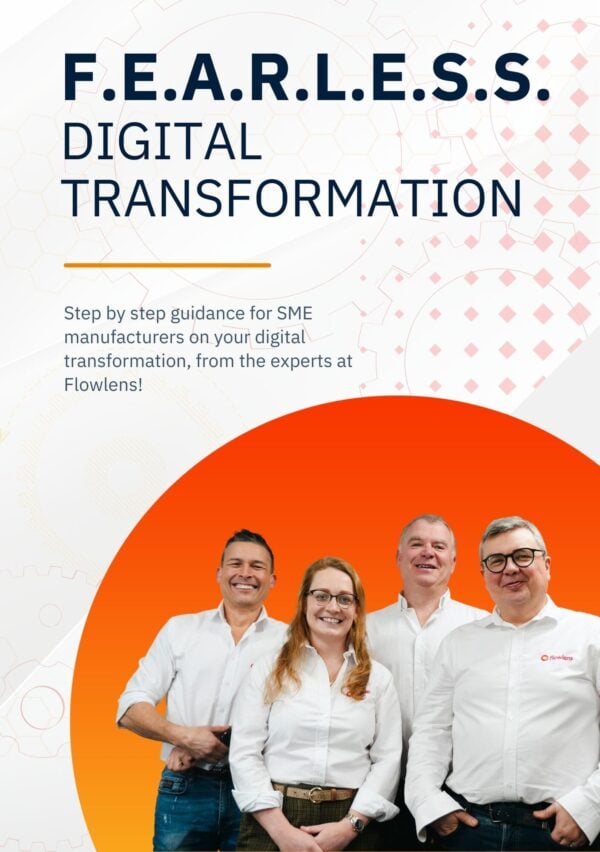
[51:55] Rich Dale: So an an nice opportunity for me to plug our new book. So myself and the team have spent some time, over the last couple of months distilling down a lot of our experience and knowledge around both that kind of foundational piece and the, you know, the execution is what’s called fearless digital transformation. So we all like acronyms these days to to, dissect these problems. But the third chapter so after after foundations and engagement, the third chapter is about analytics and data because Yeah.
[52:31] Rich Dale: As you touched on, two separate points there, you know, those the board, the managers, you know, what’s what are the the the the drivers of my activity? What’s gonna move the business forward? But then the data, you know, the, so there’s quite a lot of practical, information in the book, and it’s downloadable from fluvents.com as a as a free ebook as well, around those steps of looking at your data, figuring out what needs just to be archived, you know, for future reference, what needs to be cleansed, you know, and and and then imported and migrated.
[53:11] Rich Dale: But, again, it’s all driven by those KPIs that there’s so many of those kind of more traditional looking systems that have, you know, screens full of fields and, you know, there’s people just feel they should fill them all in and nobody ever asks why.
[53:24] Angela Fumpson: Yeah.
[53:26] Rich Dale: So it it’s in the same way as the process map is kind of an audit of of how you operate. That data audit is is, a kind of a an analysis of what do we actually need to run the business and and no more. And, so I, command your point and recommend that, listeners, visit flulens.com to download the download the ebook.
[53:52] Angela Fumpson: Yeah. I’ve had the privilege of having a read already. Yeah. It’s good stuff. Good stuff.
[53:58] Rich Dale: Thank you. Well, thanks for your support with it. So just I suppose we’re coming around to the towards the end of the episode, again, Angela. So, if you were to to sum it up, you know, normally, I ask this or guests to leave the listener with, you know, one, one key thing that they would they would do. And, obviously, we have covered a lot both in the previous episode on this one.
[54:29] Rich Dale: So I’ll I’ll not force you to to pick pick one, but if you would summarize, you know, the like, those kind of critical success factors in the execution of this of a a change project, what would they be?
[54:41] Angela Fumpson: For both episodes or for today?
[54:44] Rich Dale: I think just for today because we we did we kind of did did did the first one. So
[54:50] Angela Fumpson: I think for today, I mean, we talked a lot about implementation, implementation project plans, and I think it’s, you know, have a strategy, have a plan, but also have empathy. You know, take the people’s needs into account as to how you’re going to train and and everybody’s individual, how you’re going to hand hold. Most importantly, how you’re going to celebrate and how you’re going to be aware of those milestones you need to celebrate. So for me and and the last data, you know, the data is key. Make sure that is correct before you even commence.
[55:26] Angela Fumpson: Make sure you know what you want to collect and that it’s correct and clean before you start.
[55:33] Rich Dale: Perfect. Couldn’t have said it better myself. Well, Angela, thanks again. I really appreciate, you taking the time to, talk today. And we covered an awful lot of really valuable information, and no listener can go away feeling like they will end up in the the 70% of projects that that fail if they if they, listen to it and and take it on board. So thank you. And we’ll obviously include your link to White Tiger and your LinkedIn profile in the show notes. So thanks again, Angela, for joining us.
[56:11] Angela Fumpson: Welcome.
[56:14] Rich Dale: Thank you.
CORRECTED:
Rich Dale: Okay. So I’m delighted to once again welcome Angela Fumpson to the Made to Grow podcast. Welcome, Angela.
Angela Fumpson: Nice, nice to be back.
Rich Dale: So thanks for coming back. Some listeners may remember our discussion from series one. It’s hard to believe we’re now in series three, where we touched on some elements of what we’re going to talk about today – change management and process mapping, and how to really coalesce around a clear vision for what you want in your business. But before we do that, could you just remind our listeners about your background and who you are?
Angela Fumpson: Yeah. So I’ve got a background in mechanical engineering and I’m chartered in quality management and process improvement. My passion at the moment is mentoring. So I love to mentor leaders and managers to get the best from their business and to allow it to deliver the way of life they need. But in the toolbox, obviously, is making sure that the structure and the process and the systems are right, which is why we end up talking a lot about process mapping and how you make these changes and digitisation.
So, yeah, excited to think about and talk about today – how you implement that change.
Rich Dale: Absolutely. And full disclosure, Angela, you’re mentoring me, which has been great fun over the last couple of months. So it’s definitely been an eye-opening and challenging, but in a good way, experience. I highly recommend it – but don’t use up all your time. I need to be selfish about that.
So moving on to the topic. We’ve talked a lot about how change management kind of makes or breaks projects. And obviously from what you’ve just described – and with Flowlens and the work that we do – it’s not just about the software, it’s about an effective change in the business. And sometimes we can go out of our way to not sell Flowlens to a company where we don’t see the readiness there.
It’s an interesting statistic that 70% of digital transformation projects typically fail, and that’s often due to a lack of leadership support. But what are the 30% doing right? So that’s partly what we want to dig into today.
And this is going to be a new experience for me because we’re going to start talking today about the planning for change. Then we’ll also talk about execution for change, but that’s going to be episode three of Made to Grow, so we’ll be carrying that theme on in the next episode.
Angela Fumpson: Yeah. I think it’s very important to talk about the pre-stage planning, because even if you’ve got the most amazing system, if everything’s not prepped and the people aren’t ready, then it could go badly on the project and reflect badly on the software, when actually it’s the preparation and the people stuff that’s much needed. There’s a lot of putting people first in digital projects.
Rich Dale: Picking that up, we touched on the lack of leadership support as one reason projects fail. Is it worth elaborating on the other reasons, and the protecting-the-people aspect?
Angela Fumpson: Yeah. It’s interesting, because even with leadership buy-in, sometimes the leaders might not be involved in the project. Unless they’re completely educated and they feel safe and confident with the change project, there’s a great saying I picked up in the automotive industry – they used to ask on the wall, “What shadow are you casting?” Whatever energy you bring into work impacts everybody else.
So if the leaders have got a little bit of concern, even though they’re not expressing it, the team running the project will feel that. So we need to make sure all the leaders are on board, they understand they’re getting the feedback and the reports they need, and then everything will run a lot smoother. Even if the top leadership is not involved in the project, they still need to be educated. They still need the buy-in, and they still need the knowledge to know the project is running well, because their influence affects everybody else in the team.
Rich Dale: I think even from a small team perspective, sometimes we see leaders that are in the thick of it, which is great, and others that are saying, “That’s somebody else’s baby.” And maybe they’re a salesperson or an engineer and they’re focused on that.
But actually, they have KPIs that they’re working towards that the new system and processes will be supporting. So even if their interaction with the actual system isn’t day-to-day, their activity will be driving outputs of that. In other words, there’s no excuse not to be part of it. And often that’s fair enough – confidence in technology isn’t always there.
Angela Fumpson: It’s about building a good case, I agree. But you have to give them the confidence, the dashboard, and the feedback to know things are going well. And they need to be very good at delegation. If they’re not involved, how is the team understanding the task? Do they understand the clear path? Do they know why they’re doing it? What’s in it for the team? They need to understand all of that. So it’s not just leadership, it’s how they delegate as well.
If they’re dropping in and out of the project and micromanaging, and quite fearful, then the project is going to be undermined.
Rich Dale: What would you say is the correct way to delegate a project like this?
Angela Fumpson: You need clear objectives and goals and everything needs to be very clearly mapped out. But it’s having a clear leader – an owner for the project. Somebody responsible for reporting, keeping the team together, and reporting up to the leadership.
Rich Dale: We find that almost 100% of the time, when there isn’t that person, you’re herding cats. It’s impossible to make progress because there’s nobody taking that final level of responsibility for things getting done. Never mind then the coaching and interaction with team members who are feeling the pain of the change and have their own concerns.
Angela Fumpson: Quite often that’s delegation because the leadership team need to allocate that person time. If that person is trying to take on the ownership and management of your digitisation project alongside their other role, and they’ve not been given space, they’re not going to be able to do due diligence and take on responsibility for that project.
Rich Dale: A hundred per cent. Moving into the world then, once you’ve got that delegation in place, what about the rest of the team? None of us likes change.
Angela Fumpson: No. I think you have to dispel the fear. You have to ask the obvious question at the beginning – have you got a culture in the company that is very embracing of innovation and change in the first place? Because if you’re throwing this project into a company that already has history with change or failed projects, or the culture’s not conducive to embracing change, you’re already starting with a project that’s going to have resistance.
So how do you work on the team, and what’s happening before you even introduce technology?
Rich Dale: Because as you remarked earlier, employees who have experienced past failure are even more reluctant to get involved. So having that presence of mind to know where the business is at matters.
Sometimes systems can be seen as a silver bullet. A business might have had an influx of orders, new demand, and suddenly strain on the processes. But the worst thing you can do then is say, “Right, let’s slap a system on this.” If you pick the wrong system or haven’t brought people along with you, it can make the bigger-picture change you really need impossible.
Angela Fumpson: You have to listen to people first. You have to know your team, your individuals, what their history is, and how they feel. Because there can be a lot of fear about role replacement even. Is my role going to exist if suddenly all these systems come in?
If you don’t listen to people and get them on board to understand why, what it’s going to do, how it’s going to help, and also support them all the way through – not just at the start – then you’ll hit problems.
A funny story – I got taught this by a little exercise. We got people to write their name or a sentence on a piece of paper and plot how long it takes them. The more you write it, the quicker you get, and you get a nice graph. Then we asked them to write it only using every other letter. If they got it wrong, it didn’t count, so you had to write it again.
They were getting quicker, but on the chart there came a point where everybody slowed down. Their brain was going, “Actually, am I getting this right? I need to check it and be more thorough, because if I get it wrong, it’s a failure.” So the graph slowed down and then sped up again.
And that’s the same with change. People start off with the support, but if you don’t keep the support going, at some point they start asking questions. “This is more clunky. I’m not there yet. Is it worth it? Is it working?” And that’s the time you need support, not just at the beginning.
Rich Dale: And that will come into our next episode in a lot more detail. Coming back to that change-friendly culture piece, how do you prepare employees for change long before you’ve picked the software and are ready to roll it out?
Angela Fumpson: You need a culture of trust at the start. We were chatting the other day about David Rock’s SCARF model – are people being fairly treated? Is what we do affecting their status, their relatedness to people, all that kind of thing. So you need to understand how you operate in the business itself. What is the culture? How do people feel?
That’s a deeper exercise, a deeper study, but you do need an element of trust in the business first.
Rich Dale: Few businesses are versed in the activities it takes to even understand where you’re at. And we come at it from the point of view of changing your software, and Flowlens isn’t like changing from Mailchimp to Constant Contact – it’s a core business system. People could have moved on and retired in the time it takes to move from one generation of a system to another.
I probably have this etched on my gravestone – map your processes.
Angela Fumpson: I was just going to say the same thing.
Rich Dale: Because it brings people together if you do it right. And it’s a way to build empathy. Sometimes, across departments, people are annoyed at each other for things that always go wrong, and there’s no cure. But whenever they sit back and look at what one is doing to the other and realise we could both be saving ourselves some time here, that’s a really positive exercise.
Angela Fumpson: It’s coming to a consensus, isn’t it? A bit like Hoshin Kanri as well. You’re agreeing what everybody needs and how best you can support each other. I don’t think people do that enough. They don’t sit down and go, “Okay, the next person in my process is Fred in this department. What does he need to receive from me in terms of information? And what format is best?”
People start talking to one another and understand what each other does and what they need from each other, and they treat each other a bit more fairly.
The internal customer concept for me has never gone away. When you start mapping processes, you start to really understand what each other needs, and then you start to come in with templates and consistency. People receive the information in the same way, in the same format, at the same time, and we start to get some standardisation so that everybody can understand it.
Rich Dale: Some of the most successful projects Flowlens has delivered recently have started with a process map. Sometimes the customer arrives having done all of that – clear idea, buy-in from the team. Other times we do it for them.
We can talk to people, get conversations going, and help understand where the blockages and misunderstandings are. It’s a fun part of the job, actually, because those people who are naturally suspicious of a software vendor can see we’re looking for the right solution for the company. And sometimes we’ll walk away, as I said earlier.
But it helps us overcome challenges quicker because we get that understanding of how the business is operating.
Angela Fumpson: It’s understanding the need of the company, but the same is with people and the team. If you can get those forums together, it’s a bit like objection handling in sales. What is their objection to having this system put in? Understand it, listen to their views.
If you can get that kind of forum going – not just with the customer, but with the teams – then everyone will be on board because you’ve got that two-way communication. You’re listening really well to them as well as educating them on what’s happening.
Rich Dale: Particularly as the organisation gets larger, how do you overcome the lack of understanding as the needs and aspirations of the business get translated down each level? How does that travel back up?
Angela Fumpson: It is about translation down to every level. For me, it’s not just about the project plan – there needs to be a communications plan. And there needs to be an order and a timing to it, because whoever isn’t in the know will make up their own story. That’s human nature.
So it’s making sure you’ve got the right timing and the right communication plan down the tiers, and it’s in a language that means something to their role. You will not have the same explanation for the board, for the managers, for the supervisor, as you will for people at the coalface. They need to understand, “What is it doing for me and my team? What do I need to know?”
Rich Dale: Exactly. With some of the work we’re doing on Flowlens with the shop floor app, it could be regarded with suspicion – “I’m supposed to tell it when I’ve started something.” But the idea is to empower the person at shop floor level. What do I do next? How do I make the most of my day and feel like I’ve made an impact? I can see what’s on my work-to list. I can see what I can start.
And if that ties properly into KPIs, and the business is driving towards a certain level of profitability, then the time I’ve tracked that’s gone into a particular job actually means something towards the overall goal of operating more profitably, and then more sustainably.
Angela Fumpson: The only way that has an impact is if you then put in something like profit share with the employees.
Rich Dale: And that’s a topic for another podcast. But it’s the kind of goal companies are aspiring to with excellence – a balanced scorecard that allows you to know you’re making a profit and people are making an impact on that.
We sometimes assume everyone has a phone in their pocket and they’re used to technology. But some people are still wary of technology and digital change. You touched on the fear of “Is this machine going to take over my job?” What methods are there to overcome those psychological barriers to change?
Angela Fumpson: You can do internal training, awareness webinars, workshops. But the most important thing is the visibility of the project. Storytelling is powerful. Where has the company come from? What is it going to do to help it take it to the next level? What’s their part in it? Help them feel safe.
There will be a lot of speculation about AI, but it’s about what the company is doing at the moment. If you wanted general training on what it is and how it works, you can have workshops internally. But the story, the trust, the reasoning behind it, the listening and the forums with your teams to build trust – that’s important.
Rich Dale: Funny, when you mentioned stories, it reminds me of a senior sales rep who’d been running his own CRM in a spreadsheet for ten years and was deeply suspicious of putting the information into Flowlens – probably one of the last people to engage, which isn’t unusual because we tend to focus on ops first anyway.
But building the trust that “This isn’t going to steal your pipeline” turned into a positive. He didn’t know what he didn’t know. Apart from the time saving of updating leads, he could do it on his phone. He didn’t have to get his laptop out. But all the other intelligence it gave him – what had been sold previously, service tickets – was a real eye-opener. Sometimes these things take time, but you can teach an old dog new tricks, I suppose.
Angela Fumpson: You got over the initial “Is it safe? Is it secure?” That’s one of the most important things. If people feel safe and secure, they then have to feel confident they can do it. And that’s down to clever training because we can’t overwhelm them. There are so many possibilities, but people need to be onboarded slowly.
When you’re in a system and you’ve got no idea how powerful it is, then you can start playing, see the possibilities, and start working with it. But it’s important to start with the basics. If you overwhelm people at the start, they’ll just say, “Well, I can’t do this.”
I had an instance where I put a new booking system in. The old case of, “I’ve got a receptionist who’s been with me forever, she’s not going to embrace new technology, but I’ve got this young receptionist, she’ll be fine.” But actually, I just sat with the receptionist for the morning, and it was the risk and fear of getting it wrong that was stopping her progressing. She needed a different type of training – somebody to sit in the background while she was learning, just in case, to know she wasn’t doing it wrong.
And she was the best on the system. Her attention to detail was great. She just needed to get over the fear of getting things wrong and what would happen if she got them wrong.
Rich Dale: We underestimate that it’s not just about “Read the manual”. People learn in different ways, and psychological barriers are hard to decipher. Making assumptions is costly.
Angela Fumpson: People don’t come to work to make mistakes. They come to work to make a difference, not just to get a pay cheque. And you don’t know how making a mistake impacts people. Different people work differently. They might have had a different history with a different company and culture. We have to bear in mind how they need training and hand-holding in the beginning.
Rich Dale: So, Angela, we’ve covered quite a few things there. For now, would you summarise the key positive takeaways – what businesses can seize to make the most of the technology opportunities and empower their staff?
Angela Fumpson: Prepare people for change, because change isn’t easy. Build the trust up first, then build your narrative and your story. Where is the company going with this? Why do we need it? Hand-hold through change. Make sure the support is continuous and the conversation is two-way. Training is not one-size-fits-all.
And celebrate. Keep people involved, keep them in the know, and celebrate. Change can be easy as long as you go on it together.
Rich Dale: I like it. I think that’s a good moment to take a pause.
(Edit discussion and segment transition)
Rich Dale: If in the meantime, before we release episode two, how can our listeners get in touch with you?
Angela Fumpson: I’m happy to link up on LinkedIn. Just share my profile. Always happy to have a conversation. Or my company website is www.white-tiger.co.uk. So have a little look on there if people want to know more about me. But yeah, reach out on LinkedIn.
Rich Dale: Brilliant. Thank you, Angela.
(Start of second part / episode continuation)
Rich Dale: Welcome back, Angela. In a slight departure from our normal programming, we are continuing our conversation from last month. For listeners who are just tuning in and didn’t hear last month’s episode, I recommend you check it out first, because we’re talking about building the right foundations for change, and today we’re going to talk about execution.
And just for those who don’t know Angela, Angela is an experienced mechanical engineer, manufacturing expert, quality expert, coach, mentor, and author, which we didn’t mention in the previous episode. I’d recommend listeners checking out the Business Journey for Tigers book on Amazon.
So kicking off on that piece – you’ve done the foundations, you’ve got your team on board, you’ve picked the software you’re going to go with, or you’ve picked the change project that you’re going to execute on. What comes next?
Angela Fumpson: We covered the communications plan in the last episode and getting your team on board. Now we’re looking at how do you mentor and train through this implementation, and how do you manage that project.
I’m biased with mentoring, but mentoring and training is absolutely key. Also having materials to allow easy access because people are not going to remember everything when you onboard them. Have you got easy instructions, easy visuals that they can jump in and out of so they feel safe they’re carrying out their role in the right way and using the software in the right way.
We touched very quickly at the end of the last podcast that people will go into fear if they fear they’ll be doing it wrong. So how do we give them the safety and confidence to embark on this journey and embrace the change?
Rich Dale: A stat I forgot to read out – but one I find fascinating – is that employees forget 90% of what they learn within a month without reinforcement.
If you give somebody some training and don’t give them any other resources, no refresher training, then even if they’re starting to use a new system, if they’re only using 10% of what they were shown, the other 90% of your investment is wasted. But then how are they feeling about that? That nervousness – “If I press this button, what will it do?” Or “Should I be using this screen?” Or “How does this tie into our quality system?” Those gaps could make it worse, and that’s before you even consider how usable the software is.
Angela Fumpson: The user journey is absolutely key. Have they got a go-to? What is their support? If they press something and something unexpected happens, have they got somebody to call on? Have they got a champion that has been trained for change, who’s there supporting the team – train the trainer, if you like. Who’s leading the change and how much support do they get? That for me is key, so they know they have somebody to call on.
Rich Dale: Are companies typically good at mentoring?
Angela Fumpson: Let’s put this nicely. Some are. Some have very good mentoring projects and understand the value of it. You’ve got to make sure mentoring is around the individual and their needs. You could be grooming somebody into a role, but that’s the company agenda, not the individual’s. So we have to be mindful we keep the individual’s agenda as well, while aligning with where the company needs to be.
Rich Dale: I can relate to that. In a small business you feel like you’re constantly running – more work, more demos, more designs, specs, you name it. So the company’s needs can trump the time it might take to pause and figure out what an individual needs to serve themselves and the business better.
Angela Fumpson: Because that creates the fight-or-flight response. Anytime somebody is in that response, their innovative abilities and ability to be productive will freeze. You’re doing a disservice to the company if you don’t give that person time for their growth as well.
Rich Dale: And how do you keep momentum going? People gain confidence. Systems are infinitely capable. New features. How do you keep momentum going?
Angela Fumpson: You need to listen to the team – what do they need? Listen to the management team, the leadership team – what do they need in terms of feedback? When we map out a project, you look at milestones. What are those milestones? What are we going to celebrate? You have to celebrate the wins. How do you know they’re achieved? What is the sign that gives everybody that moment where we go, “Right, we’ve done that. That’s great. That’s implemented. That’s embedded.”
Rich Dale: Stopping to take a breath and acknowledge success is something small businesses tend not to do.
Angela Fumpson: I guarantee if you do not stop to acknowledge, you will rob them of motivation going forward.
Rich Dale: Thinking about success, how do you go beyond technical metrics? You can see if a system’s deployed, if people are using it, if sales have changed, performance has changed. But how do you get deeper into understanding if you are being successful?
Angela Fumpson: It’s interesting to see when somebody’s in the system, how much are they using across the whole customer journey. But also – have you asked the individuals using the software how they feel about it? What’s working? What’s not? What’s a challenge? What needs more focus? It’s the human metrics as well as the project and technical metrics.
Rich Dale: That comes back to the reinforcement stat. In our projects we’ll have the initial phase of process mapping and simulating company processes in a sandbox system – safe environment for people to press buttons, work through processes, not worry about breaking anything, and confirm it’s going to work.
But then you go live, and using it in anger is always different from simulating a pretend order. So that follow-up matters. We don’t really sign off on the go-live phase until we’ve had engagement – maybe not with the whole team, but we usually work through a champion. That champion is the conduit for questions, and they won’t necessarily have the experience yet.
Angela Fumpson: I would advise a bit of caution. Make sure there’s an open and trusted relationship. Think about who that champion is. If that’s your direct manager, how comfortable are you going to be saying, “This isn’t working”, and having an open conversation? When somebody’s independent like yourselves and you sit down with them to get feedback, they may be more honest. Not always, but it’s something.
When I’m talking about doing a gemba walk on the shop floor, I always think about the qualities of the individual doing that walk and who they are.
Rich Dale: That’s a very good point. Different leadership styles. If you’ve got a very open style, you’ll be eager for that feedback. But if your ego is attached to something working or not, it’s different.
Angela Fumpson: Yeah. And that person could be fearful, and they might need to be held in that conversation.
Rich Dale: That goes back to building a culture of change. With AI now touching every workstream, it can feel like you want to bury your head in the sand, but that’s a quick way to business failure – maybe not this year, but in the next five to ten years. Reskilling the business for change – it’s new plumbing you’re putting in, not just the system but the way people consider change and excellence.
Angela Fumpson: It is a big job, and you have to be honest. You have to be realistic so people don’t get unrealistic expectations – that it’s going to go in and just work. People have to learn. Things will feel clunky because it won’t be second nature. You have to manage people. You have to have compassion within that role. You can’t expect exactly the same from somebody who’s now on a brand new system that they’re learning.
Rich Dale: For a period of time, you may be running two systems in parallel, and you will have extra work. But if you’ve done the planning and preparation and validation of processes – outcome-led, “How do I dispatch an order? Raise a purchase order?” – you know how you’re going to get the job done. With repetition and backup, you’ll get there.
Angela Fumpson: Parallel systems can be good for the data because it gives people confidence in the figures. If the two systems are producing the same figures, it can give confidence to carry on. But duplicated inputting is not a thing to be done for very long.
Rich Dale: Typically, no more than a month. What other aspects of implementation are critical?
Angela Fumpson: We’ve covered a lot. It’s managing the project and having transparency. Manage expectations and have a very clear project plan that everybody’s aware of. And I don’t believe that’s just the team involved. Make it company-wide. Because if somebody needs something from a department that isn’t aware of the project, they won’t be aware of the demands being placed on them. You can build resentment because nobody knows what’s going on.
So make it company-wide. Make everybody know what’s going on even if they’re not involved.
Rich Dale: That goes back to process mapping. If the whole company participates, they know the journey, the starting point. And mapping the “as is” before you map the “to be” is critical. Even if a department isn’t involved until six months down the line, they have visibility. We mapped what we’re like now, agreed improvement areas, and we’ve got a roadmap.
Angela Fumpson: That’s key because if they’re six months down the line, they could be worried things will be ingrained and embedded before they have an opportunity to alter it or have input. They need to be involved in the beginning so they realise they have a voice at the start of the project, even though their department might not be part of the change for a while.
Rich Dale: So coming back to different roles – how do you customise support for different roles?
Angela Fumpson: It’s about understanding what each role needs to see. With a business owner, what do you need to see daily in terms of data? What’s your dashboard to enable decisions? Start with that. Same with a department manager – what do they need to see daily to make decisions? Then demonstrate where they can get that easily from the system. That gives confidence.
Every role may be different. They might have a different user screen, different dashboard. So it’s understanding what they need to see and how they see it.
Rich Dale: And with the shop floor – if I can come in and know what I’m doing now, next, and after that – I’ve got autonomy. I don’t have to go up to the office or the supervisor and bother them, and they might not have the answer anyway. It’s that empowerment piece.
Angela Fumpson: And where is the information? Where’s the data? Can I look in and go, “Right, I need to pick these parts. I know exactly where they are, what storage location, how many I need, what batch they are.” You’ve empowered them.
They don’t have to ask where the box that came in on Monday is, that hasn’t had its QC check and is still sitting. They’re informed when it’s ready, where the location is, and that it’s been passed.
Rich Dale: Have you any examples of this in action, beyond the receptionist example you gave previously?
Angela Fumpson: I’ve been involved in a lot of change projects. The nicest is when it’s from scratch because you can design the project and be on the journey. The hardest is when you’ve already got a system.
The most successful I’ve seen is when the training is thorough and people aren’t left on their own. The failures I’ve seen are when people can’t find what to do, and then what inevitably happens is they’re still running spreadsheets alongside the software. Then they have no way to combine that data back into the system, so they’ve got unreliable data. Everything starts from the right data.
So when things work, for me it’s a migration that’s very important. The data’s cleansed, the data’s correct to start from, and it’s all working. Once people have confidence in the data and they’re getting the right information, the project works.
If people start using it and getting wrong information, they lose faith in the system and everything goes wrong. So the ones that are really successful spend time migrating the data and checking everything is correct.
Rich Dale: Nice opportunity for me to plug our new book. We’ve spent some time distilling down our experience and knowledge around both the foundational piece and the execution – it’s called Fearless Digital Transformation. The third chapter is about analytics and data.
There’s quite a lot of practical information in the book, downloadable from flowlens.com as a free ebook, around those steps of looking at your data, figuring out what needs archived, what needs cleansed, then imported and migrated. But it’s all driven by KPIs. There are systems with screens full of fields and people feel they should fill them all in and nobody asks why.
In the same way as the process map is an audit of how you operate, that data audit is an analysis of what do we actually need to run the business, and no more. So I recommend listeners visit flowlens.com to download the ebook.
Angela Fumpson: I’ve had the privilege of having a read already. It’s good stuff.
Rich Dale: Thank you. So we’re coming towards the end. If you were to summarise the critical success factors in the execution of a change project, what would they be?
Angela Fumpson: For today – have a strategy, have a plan, but also have empathy. Take people’s needs into account as to how you’re going to train and hand-hold. Most importantly, how you’re going to celebrate, and be aware of those milestones you need to celebrate.
And the last thing – the data. The data is key. Make sure it is correct before you even commence. Make sure you know what you want to collect and that it’s correct and clean before you start.
Rich Dale: Perfect. Couldn’t have said it better myself. Angela, thanks again. I really appreciate you taking the time to talk today. We covered an awful lot of really valuable information. We’ll include your link to White Tiger and your LinkedIn profile in the show notes. Thanks again, Angela, for joining us.
Angela Fumpson: You’re welcome.
Rich Dale: Thank you.